

 The Rising Cost of Justice: Why Forensic DNA Testing Is Getting More Expensive
Angela Mew, Executive Director
February 2026
A Transformational Tool Now Facing a Financial Crisis
Forensic DNA testing has transformed the way violent crimes are solved in the United States. It has identified unknown victims, named offenders decades after a crime, and given families answers when all hope felt lost. At Season of Justice, we fund this work because we believe every case deserves access to the best available science. But over the years, the cost of that science has increased dramatically, and the impact is being felt not just in our budget, but in the number of families and victims who are forced to wait longer for justice.
What Our Data Shows: A Five-Year Cost Surge
Our internal Vendor Lab Cost Analysis from 2020 to 2025 shows how significant these increases have been. Whole genome sequencing that cost $2,499 in 2020 now costs $7,999. Forensic genetic genealogy research that once averaged $1,000 has risen to $3,799. DNA extraction costs nearly tripled in just a few years. Nuclear DNA analysis at one of our partner labs climbed from $895 in 2021 to more than $2,100 in 2025. Even the genealogy database fees required to generate investigative leads have doubled. The same donation that once funded multiple cases may now fund only one or partial testing. Unfortunately, these are not optional services, they are the core tools used to solve today’s most complex cold cases (Figure 1).
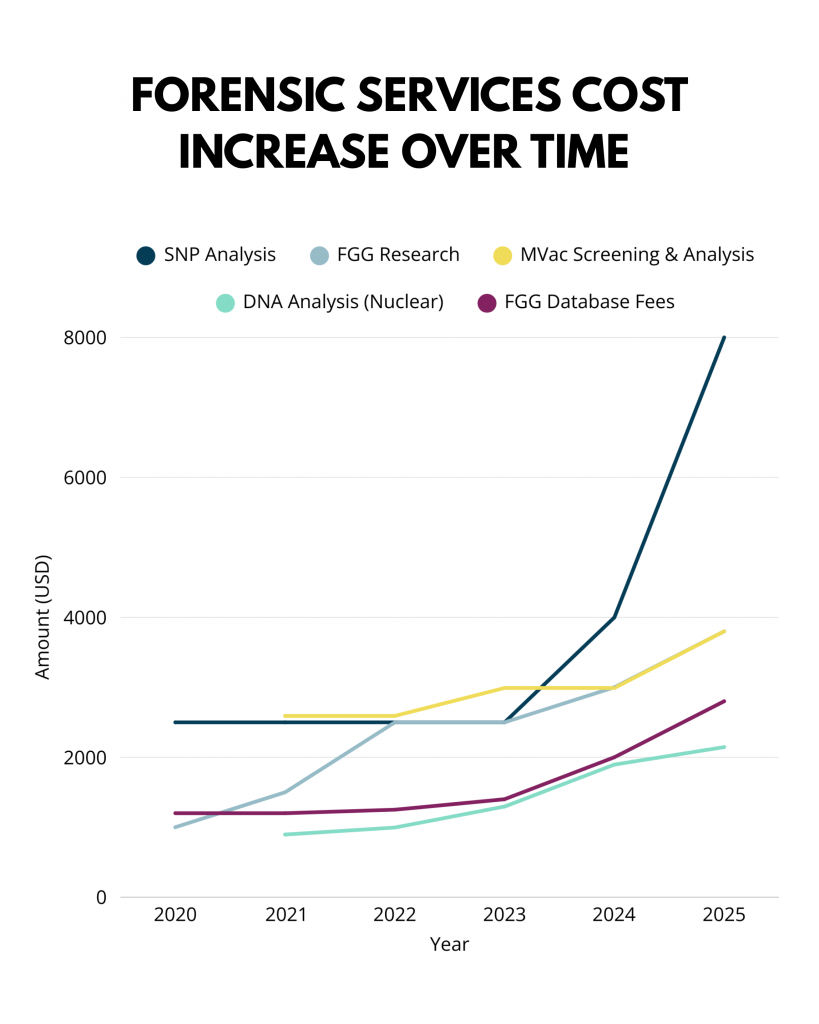
Figure 1 Vendor Lab Cost Increases, 2020–2025
Note. Data from Vendor Lab Cost Analysis, 2020–2025, by Season of Justice (2025).
More Powerful Science Comes at a Higher Price
This trend is not unique to Season of Justice. Across the forensic science field, advanced DNA testing has become more expensive as the technology has become more powerful. While traditional short tandem repeat (STR) remains the foundation of forensic DNA analysis, it has increasingly been supplemented by next-generation sequencing and whole genome sequencing, which require highly specialized instrumentation, extensive validation, and advanced bioinformatics analysis. The National Institute of Justice has documented that newer methods carry substantially higher operational and infrastructure costs, as they dramatically improve the ability to recover usable DNA from degraded or limited samples (National Institute of Justice).
The “Golden State Killer Effect” and National Demand
Demand for these services has also surged. Following the identification of the Golden State Killer in 2018, law enforcement agencies across the country began reopening cold cases and turning to forensic genetic genealogy to identify unknown offenders and unidentified human remains. This national shift created a rapid increase in submissions to private forensic labs, contributing to higher pricing, longer turnaround times, and the need for expanded laboratory capacity. The DOJ’s interim policy on forensic genetic genealogy reflects how quickly this field has grown and how widely it is now being used (U.S. Department of Justice).
Supply Chain Disruptions and Inflation in the Lab
At the same time, forensic laboratories are facing the same economic pressures affecting the broader scientific and medical testing industries. DNA analysis depends on specialized reagents, plastics, sequencing kits, and precision instruments, many of which experienced supply chain disruptions and price increases during and after the COVID-19 pandemic. Reports from the laboratory supply industries show that consumables used in molecular testing saw double-digit price increases due to raw material shortages, shipping delays, and increased manufacturing costs (Sekisui Diagnostics; ZAGENO).
The Hidden Impact of Tariffs on Forensic Testing
Tariffs have added another layer of financial pressure. Many of the components used in laboratory instrumentation and testing workflows, including electronics, plastics, and precision parts, are imported. U.S. tariffs on scientific and electronic goods have increased costs for manufacturers and distributors, which are then passed on to diagnostic labs. Although forensic laboratories operate within the justice system rather than healthcare, they rely on the same molecular technologies, reagents, and instrumentation as diagnostic laboratories and are therefore affected by the same supply-chain and cost pressures. This is why many experts have warned that tariffs raise the price of essential equipment and consumables, making advanced testing more expensive across the board (PricewaterhouseCoopers; Sekisui Diagnostics).
What Rising Costs Mean for Families and Victims Waiting for Answers
For the families and victims we serve, these rising costs translate into something deeply personal: TIME. When the price of testing increases, fewer cases can be funded at once. That means more parents and loved ones waiting for answers, more unidentified victims without their names, and more violent crimes without resolution. Cold case investigations are already measured in years and decades. Funding delays stretch that timeline even further, and every delay risks lost evidence, lost witnesses, and lost opportunities for justice.
The Reality for Season of Justice
For Season of Justice, the challenge is both financial and strategic. Our mission has not changed, we exist to remove financial barriers so agencies can pursue the testing that solves cases. But the reality is that each case now requires a significantly larger investment than it did just a few years ago. We must be more intentional in how we allocate funding, more proactive in building sustainable partnerships with laboratories, and more committed than ever to long-term, reliable support from donors and funders who understand that the cost of justice is rising.
Why This Technology Is Still Worth the Investment
Despite these challenges, the value of this technology cannot be overstated. The same scientific advances driving up costs are also solving cases that were once considered impossible and giving law enforcement the investigative leads they never had. These technologies are not simply more expensive, they are empirically increasing the success rate of developing usable DNA and advancing cases that had reached investigative dead ends.
Costs Should Never Stop a Case from Being Solved
Justice has always required investment. Today, that investment is larger, but so is the impact.
Season of Justice will continue to fund this work because every solved case changes families and communities forever. The question is not whether science is worth it, the question is whether we, as a community, are willing to ensure that cost is never the reason a case goes unsolved.
In Solidarity,
Angela